Amazon DSP retargeting is where impressions turn into actual intent, and intent turns into purchases. It works because it doesn’t guess. It uses Amazon first-party shopping signals to follow real shoppers who browsed, paused, compared, and almost bought but didn’t finish.
This playbook is not theory. I use this approach every day with Amazon DSP remarketing audiences and Store retargeting segments. I combine it with video-view remarketing and abandoned cart drip paths to drive conversions. When you mix precise lookback windows, audience suppression, and frequency caps, the system stays efficient. It prevents budget leaks even when your CTV spend is high.
Why Retargeting Matters for CTV Growth Buyers
CTV is great at getting attention, but attention alone won’t move users down the funnel. If you stop at CTV exposure, you end up celebrating impressions without conversions. That’s why CTV often feels inconsistent big screens, big excitement, tiny purchase lift.
Amazon DSP retargeting fills that missing middle by nudging shoppers who saw your ad on Prime Video, Fire TV, Twitch, IMDb, or Disney and then scrolled away. It reconnects with them across devices and turns visibility into action.
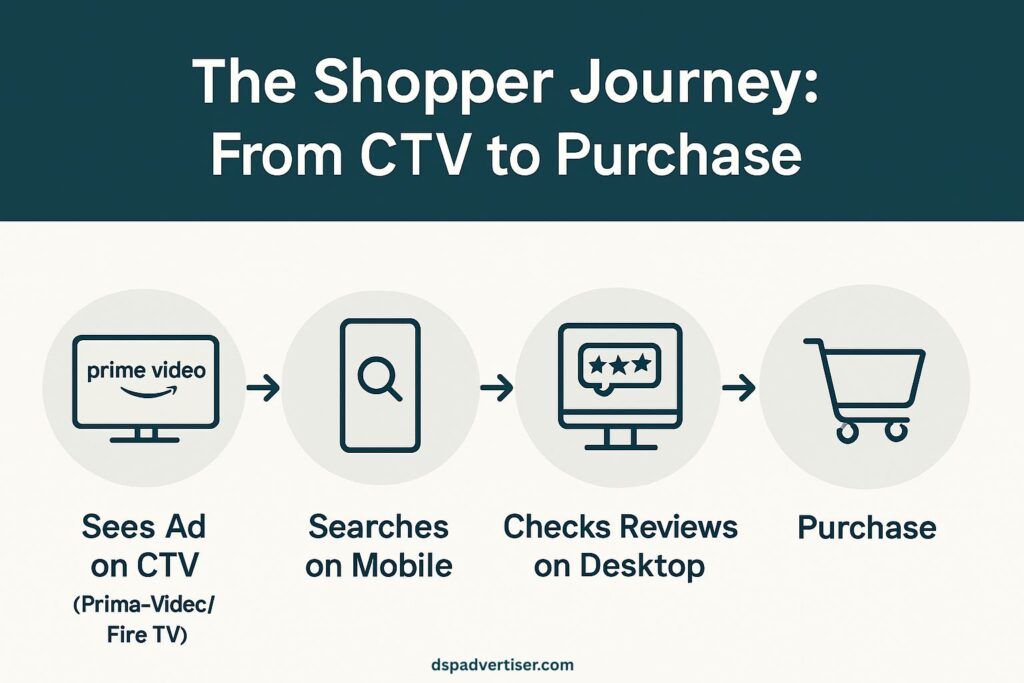
Most shoppers don’t buy where they first see the ad. They watch a trailer on Prime Video, check product reviews on Amazon Store pages, add it to cart on mobile, and then finally purchase from desktop the next day. That journey looks chaotic, but it isn’t random. 70% view ads on TV and convert elsewhere and Amazon DSP remarketing strategies are built for exactly that pattern.
Retargeting isn’t a recovery tactic. It is the conversion phase. When Amazon DSP site retargeting, Amazon Store retargeting, and video-view remarketing run in sync, the shopper journey becomes one clear path instead of scattered signals. And when you add abandoned cart audiences with 3–7 day lookback windows, you capture the moments where intent is hottest and hesitation is smallest.
What Amazon DSP Retargeting Really Is
Amazon DSP retargeting sounds complex, but at its core, it’s simple. It’s the act of gently tapping shoppers who paused, browsed, added-to-cart, watched your ad, and then slipped away. It doesn’t chase cold traffic. It reconnects with people who already showed intent but just needed time, price clarity, review reassurance, or one last nudge.
The magic comes from Amazon first-party data. These aren’t random cookies or guesses. They are live shopping signals combined with a real device graph. Someone sees your ad on Alexa, searches later on mobile, then checks reviews on desktop that’s one person, not three. Amazon knows that path, and Amazon DSP remarketing strategies make sure your message follows them without feeling pushy.
It works everywhere shoppers move. CTV, display, Twitch in-stream video, IMDb, Prime Video placements, and mobile app inventory are all connected. Amazon DSP retargeting meets shoppers where they left off and doesn’t assume they’ll come back on their own. It’s not chasing. It’s simply showing up again, at the right moment, on the right screen.
If you’ve ever watched a trailer and said, “I’ll grab it later,” but bought it two days after seeing a reminder ad on your phone that’s this system doing its job.
Core Retargeting Audience Types You Must Use
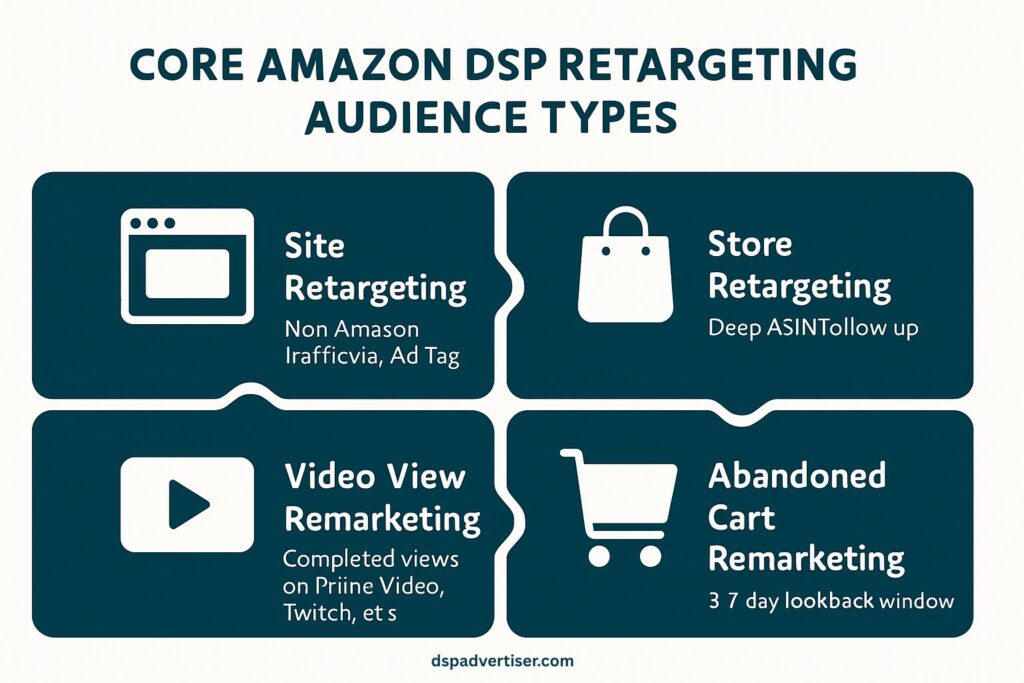
Amazon DSP Site Retargeting (Pixel + Ad Tag)
This is where your non-Amazon traffic becomes a remarketing audience. A shopper visits your DTC site, reads reviews, compares SKUs, and leaves without converting. The Amazon Ad Tag catches that visit and retargets them later on Amazon-owned inventory. It works best for buyers in research mode who have interest but no commitment yet.
Amazon DSP site retargeting is ideal for education-heavy products, high-AOV items, and comparison categories. You’re not begging them to buy you’re reminding them of what they already wanted. This is where pixel-based audiences feel less like ads and more like memory cues. They saw it once. You simply bring it back.
Amazon Store Retargeting
Think of this as deep ASIN follow-up. Someone viewed a PDP, checked colors, read reviews, clicked bundle options, and then closed the app. They didn’t say “no.” They said “not now.” Amazon Store retargeting is your chance to re-open that moment.
This tactic shines when product depth matters. If you sell variants, accessories, upgrades, or bundles, this retargeting is gold. You can guide shoppers to matching pieces, seasonal combos, or subscription refills without any cold pitch. It’s not new discovery it’s familiar intent warmed back up.
Video-View Remarketing (Prime Video, Twitch, IMDb)
Most shoppers don’t convert when they first see your ad. They convert when they see it again in a softer, shorter format. Video-view remarketing captures those completed views, 50% views, and even short skips. It turns passive attention into active buying moments.
Think about someone watching your brand trailer on Twitch or Fire TV. They smiled, got curious, and then life moved on. Video remarketing meets them later on display or mobile and reminds them without noise. Clean, relevant, familiar. This is the bridge between “I remember that” and “I will finally buy it.”
Abandoned Cart Remarketing (DSP for Abandoned Cart)
Cart abandonment is not rejection it’s hesitation. Maybe shipping felt high. Maybe color choice felt wrong. Maybe checkout timing was bad. DSP for abandoned cart catches that moment and follows up while the intent is still hot.
The sweet spot for lookback windows is 3–7 days. You don’t wait too long. You don’t rush either. Dynamic ASIN creatives do the heavy lifting here. They pull exact product details, prices, ratings, and images to make the reminder feel personal and gentle.
Lookback Windows That Actually Work (Avoid Frequency Waste)
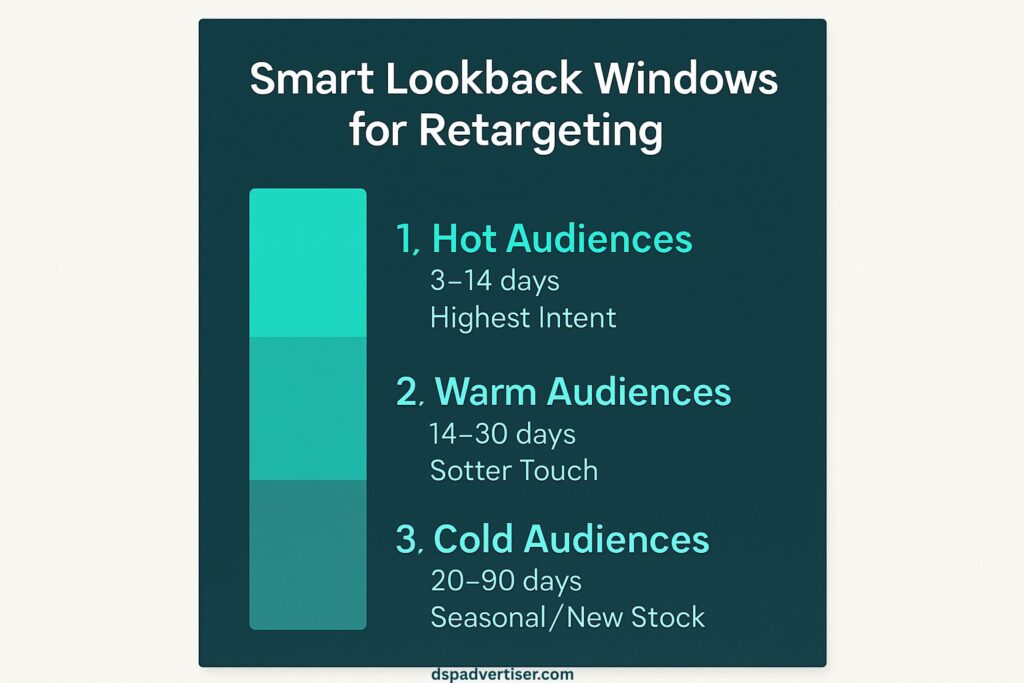
Timing is everything in retargeting. You don’t want to pester a shopper days after they browsed, and you definitely don’t want to waste impressions on someone who forgot your product months ago. That’s where smart lookback windows come in.
Hot audiences (3–14 days) are your “just-missed-it” shoppers. They browsed, maybe added to cart, or watched a video and left. The intent is fresh catch them now, and you’ll see conversion lift.
Warm audiences (14–30 days) need a softer touch. They’re interested but distracted. Gentle nudges with Amazon DSP retargeting can pull them back without feeling spammy.
Cold audiences (30–90 days) are trickier. Interest has faded, but strategic messaging like seasonal bundles or new stock alerts can reawaken them. Beyond 90 days, it’s usually best to exclude lapsed non-buyers unless there’s a seasonal reason like holidays, gift cycles, travel gear, or supplements.
Audience Exclusions: The Part Most Teams Skip (But You Shouldn’t)
Exclusions are like fine-tuning a musical instrument they ensure harmony in your campaigns. Ignore them, and your DSP budget leaks like a sieve.
Exclude recent purchasers (7–30 days depending on your product lifecycle). No need to pester someone who just bought they’re already sold.
Suppress frequency beyond 6–9 impressions per shopper. Too many ads breed fatigue, and even high-intent buyers will start ignoring you.
Also, exclude upper-funnel overlapping audiences. You don’t want to pay twice for someone who’s already being targeted elsewhere.
Finally, filter out category tourists and window shoppers when ROAS matters. These are the folks browsing casually without real intent, and retargeting them dilutes your performance.
How I Run Retargeting at DSP Advertiser (What Makes Us Different)
I don’t treat Amazon DSP retargeting like a set-and-forget traffic machine. I treat it like a live signal system that needs constant tuning, just like adjusting sound at a concert. Shoppers move fast, and so do their cues. That’s why I refresh and suppress Amazon DSP remarketing audiences in real time instead of waiting for weekly cycles. When someone buys, they’re out. When someone stalls, they’re in but with the right timing, not blind repetition.
I don’t rely on generic lookback windows either. I set custom lookback rules based on how people actually shop, not how defaults suggest they should. This is where real AMC layered insights matter. They help me see paths in a clean line: CTV ad → Store view → cart → purchase. No “maybe.” Each step is visible, trackable, and tied to revenue, not reach.
Reporting stays honest. I don’t inflate CTV narratives or twist attribution to make upper-funnel activity look heroic. If a video-view remarketing loop on Twitch is driving ROAS and dynamic creatives are lifting repeat purchases, I call it what it is. If a placement burns, pacing control kicks in before waste becomes a trend. Predictable pacing and SLA reliability keep spend clean. No surges. No mid-month panic.
The structure isn’t static. It shifts with season, inventory, and buyer mood. DSP + AMC + Amazon Store retargeting sit together, not as silos. I track brand halo, PDP depth, cart abandonment, and video memory cues like puzzle pieces. When the system moves, I move with it.
Measurement & Attribution Without the Frustration
Measurement shouldn’t feel like solving a mystery novel with missing pages. With AMC paths, I can see the clean arc from CTV exposure to PDP view to final checkout. Each step shows its place in the conversion, so I can give credit without drama. No last-click bias stealing the spotlight from the retargeting layers that did the heavy lifting.
Frequency caps follow human behavior, not ad platform defaults. When AMC shows shopper decay after 8 impressions, I cap at 6–7. When cold audiences feel fatigue at 3 touches, I stop at 2. This keeps Amazon DSP retargeting gentle and cost-aware. Less chase. More clarity.
Multi-touch reporting gives me perspective. It shows how Amazon video remarketing and Amazon DSP site retargeting play different roles but share the same finish line. A person saw a Prime Video placement, browsed colors, abandoned cart, and came back because dynamic creatives showed them the exact ASIN they left. Measurement confirms the moment. It doesn’t guess at it.
For retention categories, I create LTV paths. Repeat purchaser segments for supplements, grooming refills, and seasonal restocks get soft reminders, not blasts. DSP for abandoned cart handles urgency. Retargeting Amazon audiences handles memory. Subscription lift comes from respect, not force. When measurement reflects customer rhythm, results stop feeling random and start feeling earned.
Creative Formats That Convert Best in Retargeting
The right creative makes your retargeting pop. Generic ads won’t cut it; you need formats that speak to intent and memory. Dynamic creatives are your secret weapon they auto-pull ASIN details, pricing, ratings, and images to make each ad feel personal.
In-stream video with 15-second cutdowns is another high-performer. It’s like giving shoppers a gentle reminder of that trailer or demo they watched, without overwhelming them.
Sponsored Trailer Retargeting works beautifully when paired with a CTV → DSP retarget flow. You hook attention first on Prime Video or Fire TV, then follow up with display or mobile reminders to turn curiosity into action.
Repeat purchaser messaging is often overlooked but incredibly effective. Alerts like “Back in stock,” “Limited time offer,” or “Bundle & save” resonate with prior buyers and drive incremental revenue with minimal friction.
What is Amazon DSP retargeting?
It reconnects with people who viewed, browsed, or added-to-cart but didn’t buy, using Amazon’s first-party signals to remind them at the perfect time.
How does Amazon Store retargeting work?
It follows shoppers who viewed your Amazon PDPs or Store pages and left, then nudges them back with clean and relevant ads.
What is video remarketing on Amazon DSP?
It retargets viewers of your CTV or in-stream placements on Prime Video, Twitch, Fire TV, and IMDb to turn attention into action.
How long should lookback windows be?
3–30 days for high intent.
60–90 days when seasonal timing matters.
Do I need AMC for retargeting?
Not required, but AMC unlocks conversion paths, frequency cleanup, and device identity so your results look real instead of lucky.
Final Take: Retargeting Isn’t an Add-On—It’s the Conversion Engine
Amazon DSP retargeting is where your CTV dollars finally stop floating and start landing.
Without suppression, smart lookback windows, and frequency caps, you don’t have remarketing you have noise.
With a structured retargeting engine, every impression supports intent.
And when intent gets support, revenue stops swinging like a loose door and starts moving like a rhythm you can trust.
This isn’t an extra layer. It’s the moment where browsing turns into buying.