Amazon DSP for Non-Endemic Brands: Lead Gen, App Growth & Off-Amazon Sales
Why Non-Endemic Brands Are Moving to Amazon DSP
You don’t need to sell on Amazon to use Amazon advertising ecosystem. This shocks many brands at first. But the truth is simple. Amazon DSP is a giant door that opens to millions of shoppers, viewers, and app users. And that door stays open even if all your sales happen on your own website or inside your app. It also stays open if you run a service-based business.
Most non-endemic brands come to ADSP because their current ads feel like guesswork. Some tell me their CTV results swing up and down like a shaky WiFi signal. Others deal with scattered data, weak reporting, and a story that never feels complete. It is hard to scale when your data lives in ten places and none of them agree. This is the pain point where Amazon DSP ads steps in with clarity, control, and real scale.
I got pulled into helping non-endemic brands with DSP by accident. A client once told me, “I don’t sell on Amazon, but I still want to use their data and ad system.” He said, “They’ve been collecting customer data since 1996, back when they only sold books.” That line stuck with me. I knew DSP could fix that problem, so I ran their first campaign. The results changed everything. They finally saw who was converting, where they came from, and what’s working across devices and platforms. That moment made me focus on non-endemic brands because they need this kind of support the most.
Summary
Non-endemic brands can use Amazon DSP to drive lead generation, app growth, and off-Amazon sales by tapping Amazon’s first-party data across premium O&O and third-party inventory. Core advantages include full-funnel reach, precise targeting (in-market, lifestyle, lookalikes), transparent frequency controls, and unified measurement via Amazon Ad Tag and AMC. The guide covers practical tactics—link-out campaigns, geo-targeting and retargeting, dynamic creative, CTV-to-mobile orchestration, and Performance+ optimization—plus when to choose managed vs self-serve access. It concludes with a four-step framework: audience planning, creative and messaging, multi-channel activation, and measurement.
What is non-Endemic vs Endemic Brands?
Endemic brands are sellers already selling products on Amazon, so their ads promote items available directly on the marketplace. These types of ads are also known as “Link-in campaigns.” They drive traffic and engagement inside the same platform where the ads are shown.
Non-endemic brands don’t sell on Amazon, but they still use Amazon Ads to reach their audience. This includes hotels, banks, insurance companies, telecom brands, travel businesses, automotive brands, and even B2B companies. These campaigns are also called “Link-out campaigns.” They drive traffic and engagement outside the platform where the ads are running.
In this guide, you’ll learn how non-endemic brands use Amazon DSP for lead generation, app installs, re-engagement, and off-Amazon sales. You’ll see how link-out campaigns work and how first-party shopper data can help off-Amazon, B2B, or service-based businesses. You’ll also see how Amazon-owned platforms—like Prime Video, Alexa, Amazon Music, Fire TV, Twitch, IMDb, Amazon Ad Tag, and AMC—can give you an edge. Most importantly, you’ll understand how to build a full-funnel Amazon DSP strategy that is simple, clean, and built for real results.
What Is Amazon DSP for Non-Endemic Brands?
Amazon DSP is an ad platform that helps you reach people both on and off Amazon. You can show your ads on Prime Video, Fire TV, Twitch, Amazon Music, Alexa, IMDb, and top sites and apps across the web where your target persona spends their time. You don’t need an Amazon store to use it. You just need a clear goal and a place where you want people to land.
The real power of Amazon DSP comes from its first-party shopper data. Amazon knows what people search for, watch, and buy. That data helps you target in-market, lifestyle and custom curated audiences who are ready to act. And that means less wasted spend and more focus on people who are a real fit.
ADSP also gives you tools like Amazon Marketing Cloud (AMC), the Amazon Ad Tag, and rich audience segments. You can reach users cross device and platforms while having centralized measurement system that can track the entire customer journey. You can retarget people who clicked your site. It feels like having a map where you can see where your customers walk, pause, and make decisions.
Why Amazon DSP Works Even If You Don’t Sell on Amazon
Access to Amazon’s First-Party Audiences
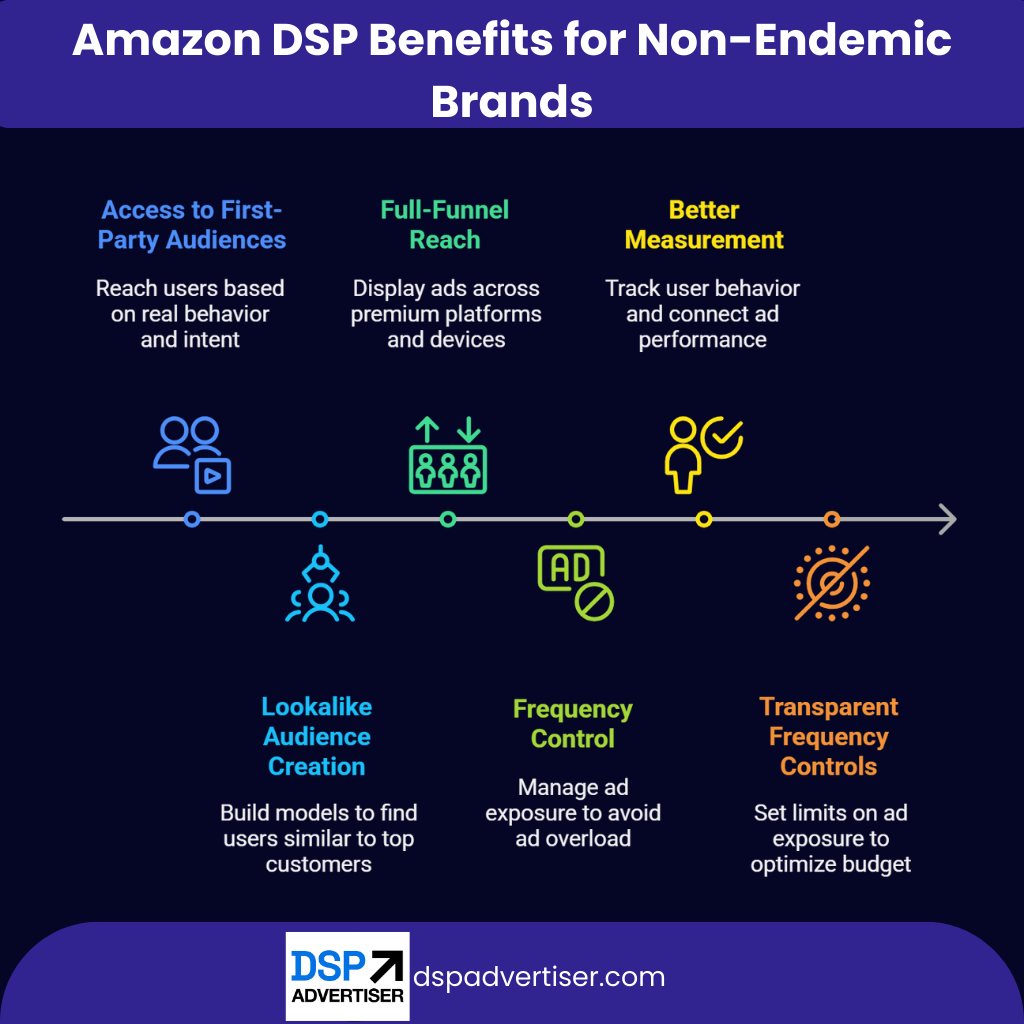
Amazon DSP lets you reach people based on real behavior. You can tap into in-market audiences who show intent for B2B tools, apps, or local services. You can reach people with clear habits like travel, fitness, finance, and more. It feels like talking to the right person at the right time.
Lookalike audiences take things further. DSP builds models based on your best users. This helps you find people who act like them. It is like finding “hidden twins” of your top customers. This is why Amazon DSP for non-endemic brands is so strong for scaling reach fast.
Full-Funnel Reach Across Premium Inventory
Amazon DSP gives you access to some of the best screens in the world. Your ads can show across multiple O&O platforms like Prime Video, Amazon Music, Alexa Fire TV, Twitch, and IMDb as well as 3P CTV and display publishers. You can use high-impact video or clean display. And you can reach the same user across many places.
I meet many CTV buyers who tell me their performance feels like a roller coaster. Platforms give them reach but no predictability. DSP fixes that with better data and frequency control. It brings stability to CTV spend that felt random before.
Better Measurement With Amazon Ad Tag + AMC
Measurement is where Amazon DSP shines for non-endemic brands. The Amazon Ad Tag tracks how users behave on your site. AMC connects the dots and shows which ads played a role in each step. You can see view-through, click-through, and post-view paths in one place.
This solves the big issue of fragmented data. You no longer need ten dashboards to tell one story. SA + DSP + AMC work together. And that gives you clean cross-channel reporting that makes attribution clear and simple.
Transparent Frequency Controls
Nothing burns budget faster than showing the same ad to the same person again and again. DSP fixes this with transparent frequency caps. You can control how often someone sees your video or display ad. This protects your spend and keeps your message fresh.
Many advertisers tell me they waste money on “ad overload” in other platforms. DSP helps avoid that. It keeps your reach wide and your frequency smart. And that leads to better results at a lower cost.
Amazon DSP for Lead Generation
How We Run Lead Gen Using DSP
Amazon DSP for non-endemic brands works best when the goal is simple: get more real leads without wasting budget. Link-out campaigns help with this because they send people straight to your site or landing page. We set these campaigns to optimize for form fills, bookings, or any high-value action you want. This keeps your flow clean and conversion-focused from the start.
Lead Generation Ads help brands that want fast lead capture. You can collect names and emails right inside Amazon’s system. It feels like having a small CRM baked into the platform. And it works well for service-based businesses and B2B teams that want quick results.
I once worked with a client who ran ads on five platforms but still had an empty pipeline. Their traffic looked strong on paper, but no one was converting. We used Amazon DSP to reach in-market audiences and built a simple retargeting layer with the Amazon Ad Tag. Their lead cost dropped, and their qualified leads finally felt real and steady.
That moment reminded me why Amazon DSP lead generation is so powerful for non-endemic brands. It gives you intent, reach, and control in one place. You can see the full story from impression to conversion. And that makes scaling lead gen feel smooth instead of stressful.
Targeting Options for Lead Gen Campaigns
Good lead generation starts with the right audience. Amazon DSP gives you in-market, lifestyle, and B2B segments that match real behavior. This helps you talk to people who are already looking for what you offer. It cuts out the guesswork and keeps your spend sharp.
Local brands also benefit from geo-targeting. It lets you show ads only in areas you serve. Clinics, home repair services, coaching centers, and local B2B teams see strong results with this setup. It keeps the funnel clean and avoids wasted impressions.
The Amazon Ad Tag brings the magic of off-Amazon retargeting. It tracks site visits and helps you reach warm users who checked your pricing or service pages but didn’t convert. These users know you already. They just need a soft nudge.
This retargeting path is rare in other platforms. It blends Amazon’s first-party data with your own site behavior. And this mix creates a lead flow that feels stable, predictable, and built for growth.
Creative Best Practices for Lead Gen
Creative can make or break your lead flow. We use a mix of display and video so people see your story in more than one way. Video helps build trust. Display helps people remember you.
Dynamic and rich media ads work well when you want to grab attention fast. These ads move and guide the eye naturally. They break the scroll without feeling loud or forced. And they help users understand your value in seconds.
Your CTA must stay clean. “Book Now,” “Get a Quote,” or “Start Free” works better than long lines. Short words push clear actions. This small detail often drives the biggest shift in conversions.
When you mix strong creative with smart targeting, Amazon DSP for non-endemic brands becomes a true lead engine. It brings reach, intent, and clarity into one flow. And this keeps your lead generation strategy simple and strong.
Amazon DSP for Apps: Installs, Re-Engagement & Event Tracking
Why DSP Works for App Growth
Amazon DSP for apps works well because it connects CTV and mobile in one clean path. Users see your video on Fire TV or Twitch and then search on their phone within minutes. This “big screen to small screen” shift is where installs happen. And DSP captures that moment with real intent.
UA teams love this because they want scale beyond crowded networks. DSP brings new reach you cannot find in normal app channels. You get premium screens, strong data, and clean reporting in one place. It feels like opening a new lane in a busy road.
The best part is how predictable it feels. You are not chasing random pockets of traffic or unstable placements. You get stable inventory like IMDb, Fire TV, and top publishers across the web. This creates steady install volume and better post-install actions.
This is why many app teams now add DSP to their full-funnel plan. It supports awareness, installs, and re-engagement in one line. And that makes long-term scaling much easier.
Tools & Features for App Advertisers
App install attribution works cleanly inside DSP. You can see which ads helped drive installs and which ones helped with early actions. This helps you avoid wasted spend. And it makes optimization simple.
Deep linking takes this further. It sends users straight into the right place inside your app instead of the home screen. This helps with onboarding, retention, and fast conversions. Small change. Big impact.
App event tracking lets you follow the user’s journey after the install. You can see sign-ups, purchases, level completions, or any event that matters to your business. It gives you the full picture instead of a one-step view.
You can also retarget lapsed users. DSP helps you reach people who installed the app but stopped using it. You can bring them back with simple reminders, clean offers, or short stories. It feels natural and effective.
Real App Growth Use Case
I once worked with an app team that hit a wall with rising install costs. Their cost per install went up each week. Their retention fell. And their funnel looked blurry. They needed new traffic that felt real and stable.
We added Amazon DSP to break that wall. We used CTV for awareness, mobile for action, and a simple retargeting layer for drop-offs. The mix felt smooth from day one. Their install cost went down, and their early retention went up.
They were shocked when they saw the AMC reports. It showed how Fire TV impressions helped mobile conversions hours later. It was the missing piece they always felt but never saw.
This moment taught me something important. Amazon DSP for apps is not just about installs. It is about building a clear path from big screens to small screens. It creates a story that feels complete and easy to scale.
Amazon DSP for Off-Amazon Sales & Retargeting
Off-Amazon Retargeting With Amazon Ad Tag
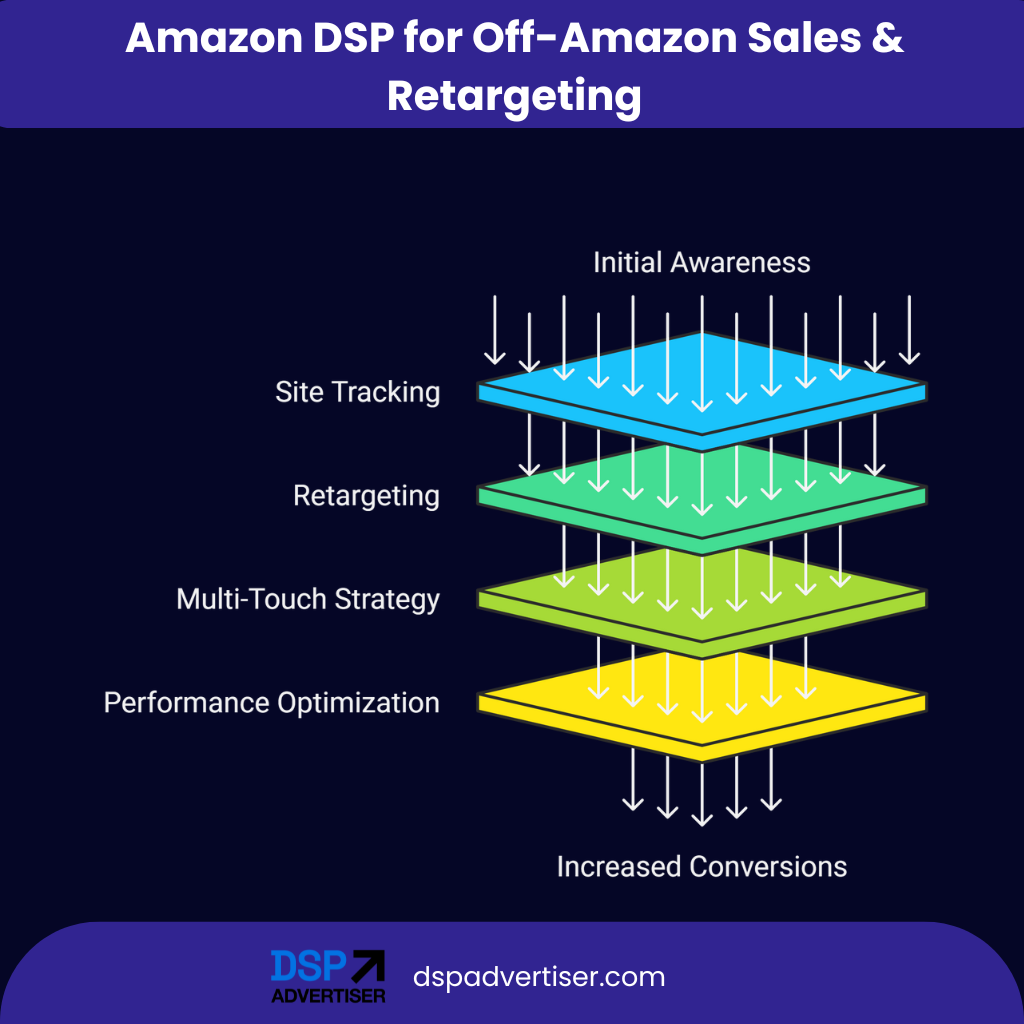
Amazon DSP for non-endemic brands is great for reaching people outside Amazon. The Amazon Ad Tag tracks visitors on your site. It knows who checked a product, pricing, or a form but didn’t convert. This allows you to gently nudge them later.
You can show these ads across Fire TV, Twitch, IMDb, and top websites. The same person can see your message in different places without feeling spammed. This keeps your brand top of mind and guides people toward buying. Non-endemic brands often see a clear lift in conversions with this setup.
Multi-Touch Full-Funnel Strategy
A single ad rarely closes a sale. That’s why a multi-touch approach works best. Start with awareness on CTV or video. Then follow up with display ads on sites people visit. Finish with retargeting to drive conversion.
This layering mirrors how people decide. They see, think, and then act. Using DSP this way makes campaigns feel natural and consistent. Your ads aren’t random—they tell a story across screens.
Using Performance+ Optimization for Lower CPA
Performance+ optimization is like a smart assistant for your campaigns. It automatically bids to reach people most likely to convert. You don’t have to micromanage every detail.
We’ve helped brands cut lead costs by 20–40% with it. Combine this with retargeting and full-funnel layering. Suddenly, every dollar spent has a higher chance of bringing results. Traffic isn’t random. It’s targeted, precise, and conversion-ready.
Managed vs Self-Serve DSP — What Non-Endemic Brands Should Choose
Minimum Spend Requirements
Amazon DSP can be accessed directly or through an agency. Direct access usually needs a high minimum spend. Agencies make it easier for smaller brands to get in. Think of it as a VIP ticket without paying the full price.
Skill Gaps & Trafficking Complexity
DSP is tricky to manage alone. Targeting, pacing, and frequency can get complicated. Many brands choose agencies to save time and stress. We handle all the setup and keep campaigns running smoothly. You focus on your business.
Ad Verification & Compliance
Amazon has strict rules. Third-party verification ensures your ads show where they should. Agencies help navigate these rules so nothing goes wrong. This keeps your campaigns safe and effective.
How We Build a Full-Funnel Amazon DSP Strategy for Non-Endemic Brands
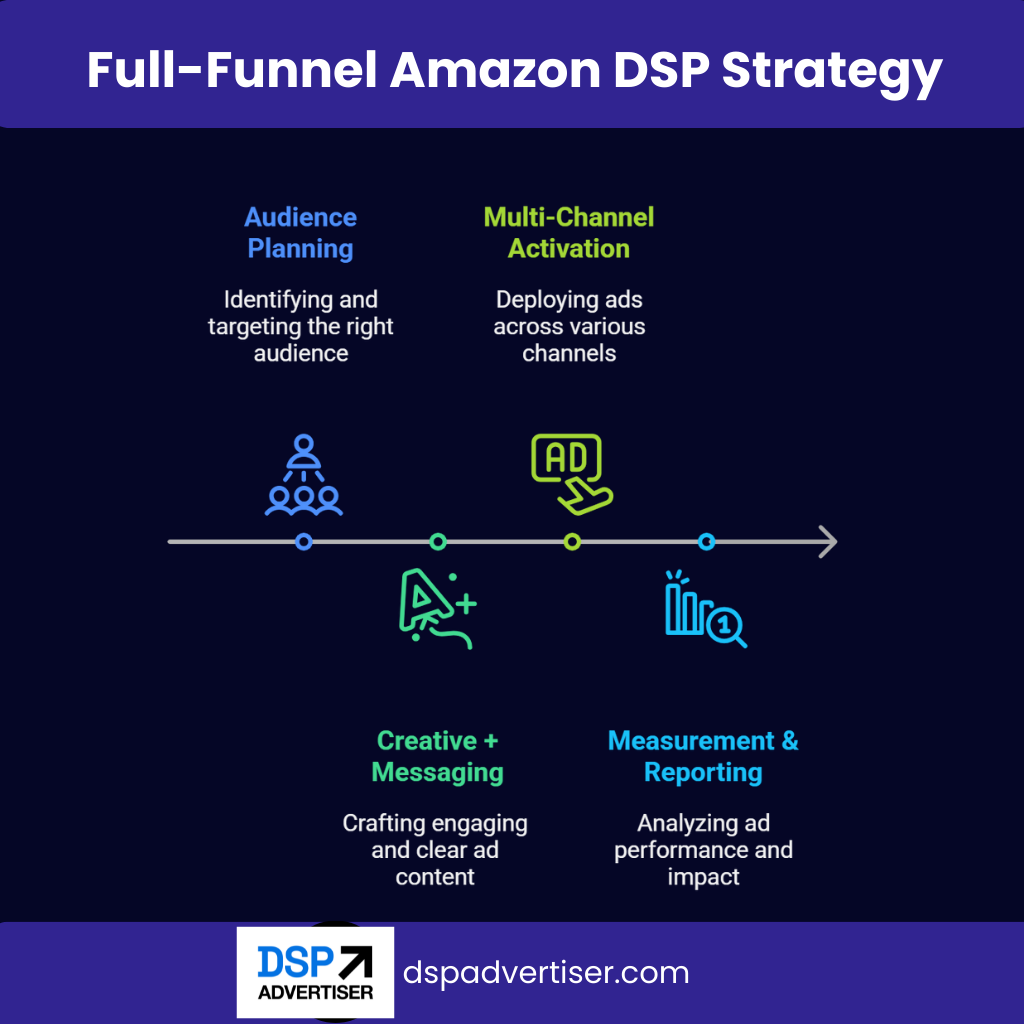
Step 1 — Audience Planning
We start with audience planning. We use in-market audiences, affinities, and lookalike audiences to find the right people. It’s like knowing who’s at a party before you join. We add geo-targeting for local DSP campaigns and retarget visitors to your site or app. Every impression counts. No wasted spend. Just meaningful connections.
Step 2 — Creative + Messaging
Next, we focus on creative and messaging. We use video, display, and rich media ads. Video builds awareness. Display reinforces your message. Dynamic creatives grab attention fast. It’s like telling your story in multiple ways. Short, clear CTAs guide people to act. Simple words. Big impact.
Step 3 — Multi-Channel Activation
The magic happens when channels work together. CTV reaches people on big screens. Display shows your ads across top websites. Online video keeps your story alive on platforms like Twitch and IMDb. Each touch nudges the audience from awareness to conversion. Layering channels keeps your message clear and your brand familiar. No random ads. Just a clear journey.
Step 4 — Measurement & Reporting
You can’t improve what you don’t measure. AMC reporting shows which ads influenced each step. Cross-channel attribution ties CTV, display, and online video together. We fill reporting gaps so every impression, click, and conversion tells a full story. It’s like turning a messy puzzle into a map you can follow.